


Meta: Discover the best connectivity options for traveling in Malaysia: WiFi, SIM cards, or eSIM. Compare pros, cons, costs, and find your ideal choice.
When in Malaysia, keeping connected is crucial. Whether it’s to post amazing images, navigate directions, or stay engaged with loved ones. With the myriad of options – WiFi, SIM cards, and eSIMs – making a decision can be sometimes hard. In this blog post, we will show the pros and cons of each alternative, drawing a conclusion of which is the best one for your journey. Let’s dive in!
WiFi in Malaysia: Pros and Cons
WiFi is widely available in Malaysia, especially in cities like Kuala Lumpur and Penang. Here’s a quick look at its pros and cons:
Pros:
- Easy Access: Convenient for brief usage, WiFi is available in hotels, eateries, and airports.
- Free: Many public places offer free WiFi, which can save you money.
Cons:
- Unstable Connection: Crowded places tend to experience slow or unreliable Public WiFi.
- Security Risks: Don’t use it for significant activities like banking, as it’s not always secure.
- Limited Coverage: Outside of major cities, WiFi is less reliable, especially in rural areas.
Useful Tips:
- Portable WiFi Devices: TP-Link M7350 can keep you in touch while you’re roaming while supporting up to 10 devices with speeds of 150 Mbps and a battery life of 8 to 10 hours.
- Use a VPN: A VPN is something to think about if you want to navigate public networks more safely in order to secure your data.
WiFi functions well in crowded areas, yet insufficiency occurs in some other places. You could want to reconsider using a SIM card or an eSIM when traveling to rural areas.
SIM Cards for Tourists: Options, Costs, and How to Buy
Getting SIM cards in Malaysia is a simple and modestly priced process. Here’s what you need to know:
Major Players in the Malaysian Mobile Scene
The big names you’ll encounter are CelcomDigi, Maxis (Hotlink), and U Mobile. These are the main providers you’ll want to consider for your Malaysian adventure.
Where to Snag a SIM Card:
- Airports: This is probably the most convenient option. After leaving customs at Kuala Lumpur International Airport (KLIA), you will spot kiosks that sell SIM cards right away. Find kiosks named Hotlink, CelcomDigi, and U Mobile.
- Shopping Malls: If you’re already in the city, head to any major shopping mall. You’ll find official stores of these providers where you can get set up.
- Convenience Stores: Some 7-Eleven stores also sell prepaid SIM cards, though the selection might be limited.
How to Buy:
- Bring your passport – it’s required for registration.
- Choose your preferred plan (more on that below).
- The staff will help you set up and activate the SIM.
- Make sure to restart your phone and test the connection before leaving the store.
Now, let’s compare some popular plans:
| Operator | Starter Pack Cost (MYR) | Includes | Approx. Cost (USD) |
| Digi/CelcomDigi | RM 8 | RM 5 credit, 2.5 GB weekly video/music, 300 MB for 7 days | $1.75 |
| Digi/CelcomDigi | RM 15 | 3 GB data, unlimited social media | $3.25 |
| Maxis (Hotlink) | RM 10 | RM 5 credit, 300 MB data for 3 days | $2.20 |
| Celcom | RM 10 | RM 6 credit, 10 GB Facebook/Instagram/Games Walla | $2.20 |
| U Mobile | RM 10 | RM 6 credit, unlimited Facebook/Instagram/Twitter, 200 MB data for 10 days | $2.20 |
| unifi Mobile | RM 15 | 1 GB data, 30-day validity | $3.25 |
Note: The USD conversions are approximate and may vary based on current exchange rates and location.
My Take: For budget travelers, the Digi/CelcomDigi RM 8 plan ($1.75) with 2.5 GB of data is ideal for light use. For more social media access, U Mobile’s RM 10 plan ($2.20) offers unlimited Facebook, Instagram, and Twitter.
Pro Tips:
- Make sure your phone is unlocked before you travel.
- Download essential apps (like Grab for transportation) before swapping SIMs.
- Keep your home SIM safe – those tiny cards are easy to lose!
eSIM: The Best Option for Modern Travelers?
First off, what’s an eSIM? Think of it as a digital SIM card already built into your phone. No need to fiddle with tiny physical cards or worry about losing them. You just download the plan you want, and you’re connected!
Pros of using eSIMs:
- Super convenient – no need to hunt for a physical SIM shop
- Activate before you land and be connected right away
- Easy to switch between plans or providers
Cons to keep in mind:
- Not all phones support eSIMs yet (check your device!)
- You might miss out on some local-only deals
- Customer support might be trickier than with a local provider
Regarding the most prominent and popular eSIM provider, I always put malaysiaesim.com at the top. They focus on duration-based plans, from 3 to 30 days, and affordable pricing starting at just $2.90.
Their multi-country plans covering Malaysia, Singapore, Thailand, and more are ideal for those traveling around Southeast Asia. After that, you’ll enjoy high-speed data (1GB/day) with unlimited data at reduced speeds and the ability to tether or use a hotspot. Plus, the eSIM is delivered instantly to your email, making setup hassle-free. No identity verification is needed, simplifying the process even further.
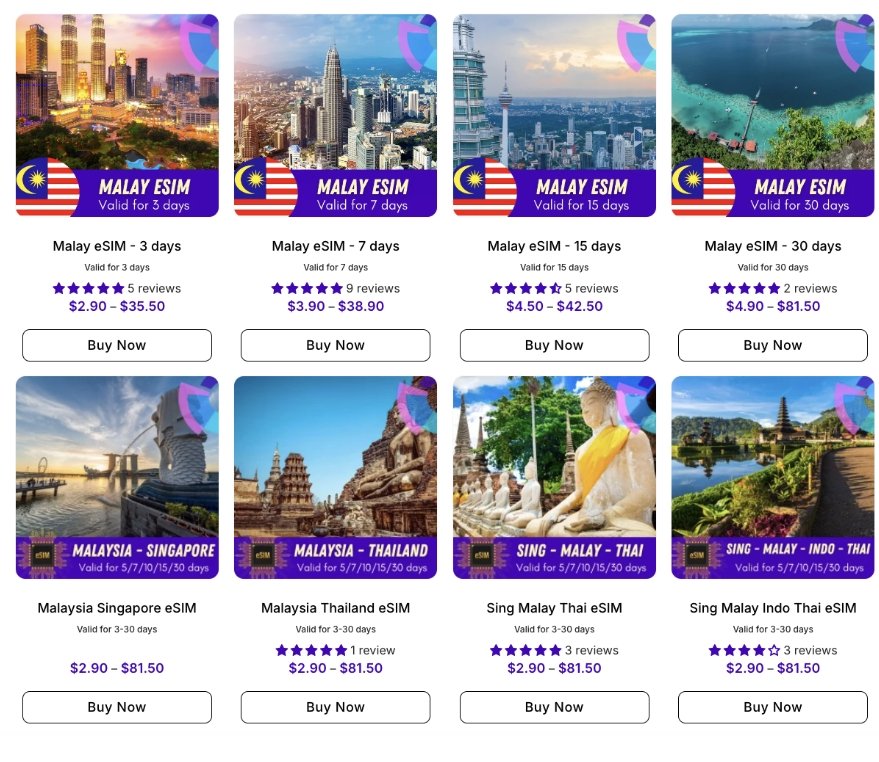
Keep in mind that your unique needs are what guide the best choice. Think about your length of stay, the quantity of data you normally use, and if you are exploring other nations too.
These days, eSIMs are a transformative element for traveling. The benefits provided, including flexibility and convenience, are larger than those available from traditional SIMs. Just verify that your phone is able to run it, and you’re good to proceed!
WiFi, SIM Card & eSIM: Which Option is Best for You?
Here’s a quick comparison of WiFi, SIM cards, and eSIMs in Malaysia to help you decide which is best for your travel needs.
| Option | Convenience | Cost | Data Speed | Accessibility |
| WiFi | Medium | Free-Low | Varies | Limited |
| SIM Card | High | Low-Medium | Good | Widely available |
| eSIM | Very High | Medium | Excellent | Limited to newer phones |
Need help choosing the best mobile plan for your Malaysia vacation? Check out our detailed guide comparing SIM cards, eSIM, providers and more: https://malaysiaesim.com/sim-card
My personal take? For most travelers, eSIM is the way to go. It’s hassle-free and you can sort it out before your trip. Just make sure your phone is compatible!
Remember, there’s no one-size-fits-all solution. Consider your travel style, budget, and tech needs. Whichever option you choose, staying connected will make your Malaysian adventure so much smoother.
Conclusion
I hope this post helps you choose the best way to stay engaged in Malaysia. Whether you go with WiFi, a SIM card, or an eSIM, each option has its own perks. For most travelers, an eSIM offers the easiest setup, while SIM cards provide good value. Choose what suits your needs best, and enjoy a smooth, connected trip! Have a good trip!
