


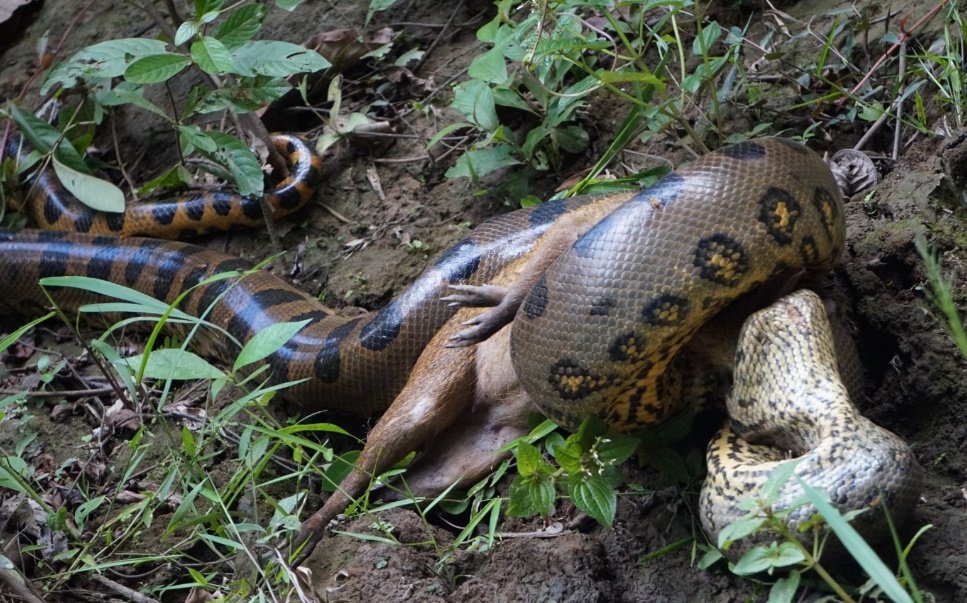
Anacondas are some of the largest snakes on Earth. They live in the swamps and rivers of South America. People often talk about their size and power. But one part of the anaconda often goes unnoticed—their teeth. In this article, we will explore everything about anaconda teeth, how they work, and why they matter.
What Do Anaconda Teeth Look Like?
Anaconda teeth are not like human teeth. They are sharp, curved, and hidden inside the snake’s powerful jaws. These teeth do not chew food. Instead, they help the anaconda grab and hold its prey.
Key Features of Anaconda Teeth:
- Curved Backwards: Their teeth curve toward the back of the mouth. This helps the snake hold prey and stop it from escaping.
- Needle-Sharp: Each tooth is thin and sharp, perfect for piercing flesh.
- No Chewing Ability: Anacondas swallow their prey whole, so they do not need flat teeth.
- Multiple Rows: Like many snakes, anacondas have several rows of teeth on the upper jaw.
Each tooth plays a role in guiding prey down the throat. The backward curve acts like a hook. Once something goes in, it’s hard to pull it out.
How Many Teeth Do Anacondas Have?
An adult anaconda has about 100 teeth in total. These are spread across different parts of the mouth:
- Upper jaw: 4 rows of teeth
- Lower jaw: 2 rows
- Palate (roof of the mouth): 2 rows
These teeth are small compared to the size of the snake. But their number and shape make them deadly.
Do Anaconda Teeth Contain Venom?
No, anaconda teeth do not carry venom. Unlike vipers or cobras, anacondas kill using force. They bite to grab prey, then wrap their body around it. This method is called constriction. The prey suffocates within minutes.
Since anacondas do not inject venom, their teeth don’t have hollow fangs. They use teeth only to grip and secure.
How Do Anacondas Use Their Teeth?
Anacondas are ambush predators. They wait silently in water or thick grass. When prey comes close, the snake strikes fast.
Steps in an Anaconda Attack:
- Strike with Open Mouth: The snake lunges forward and bites the prey.
- Teeth Grip the Prey: The curved teeth hold the prey firmly.
- Wrap Around: The snake coils around the animal.
- Squeeze Until Suffocation: With each breath the prey takes, the coils tighten.
- Swallow Whole: Once the prey dies, the snake unhinges its jaw and swallows it.
The teeth play a key role in the first step. Without them, the snake could miss or lose its grip.
Can Anaconda Teeth Harm Humans?
Yes, they can—but usually, they don’t. Anacondas are not aggressive toward humans. They only attack if they feel threatened.
If an anaconda bites, its teeth can break the skin. The bite may cause:
- Deep puncture wounds
- Swelling
- Infection risk (from bacteria)
But remember, the real danger is not the bite—it’s the constriction. Most attacks on humans are rare and usually happen in the wild or in captivity.
Do Anaconda Teeth Grow Back?
Yes. Like many snakes, anaconda teeth grow back if lost or damaged. This is important because they often lose teeth while eating or fighting. New teeth grow quickly and replace the old ones.
This ability helps the snake stay ready for hunting at all times.
What Do Anacondas Eat Using Their Teeth?
Anacondas eat a wide variety of animals. Their teeth help them catch and eat meals that are often bigger than their head.
Common Animals an Anaconda Eats:
- Fish
- Birds
- Rodents
- Capybaras
- Deer
- Caimans (small crocodiles)
- Occasionally, jaguars
The snake uses its teeth to grab the prey and start the eating process. Then strong muscles and body movement finish the job.
Why Are Anaconda Teeth Important?
Anaconda teeth are small but mighty. They may not look dangerous, but they serve several key roles:
- Capture: Help grab fast-moving prey.
- Hold: Stop prey from escaping once caught.
- Guide: Help move prey down the throat.
- Protect: Act as a defense if the snake feels attacked.
Without these hidden tools, anacondas would struggle to eat and survive.
Fascinating Facts About Anaconda Teeth
Here are some quick, fun facts to remember:
- Anaconda teeth do not chew; they only grip.
- Teeth are not poisonous.
- They are replaced naturally throughout the snake’s life.
- Teeth are angled backward, making it hard for prey to escape.
- Anacondas use their teeth only to start the hunt, not to kill.
Conclusion
Anaconda teeth may not be the first thing people notice, but they are a vital part of the snake’s hunting system. These sharp, curved tools help the snake grab, hold, and eat prey efficiently. Though they do not carry venom or chew, they play a huge role in the life of one of nature’s most powerful reptiles.
If you ever see an anaconda, remember this—those silent, hidden teeth are one of its deadliest weapons.
