


Reliable home internet is no longer a luxury—it is an absolute necessity. Whether you stream 4K movies, work remotely, or host intense multiplayer gaming sessions, having a fast and stable internet connection underpins almost every aspect of daily digital life. Among the major internet service providers across the UK, Sky Broadband stands out as one of the most prominent, established, and widely used options on the market.
Known primarily for its television broadcasting dominance, Sky has steadily built a massive telecommunications footprint. By leveraging the widespread Openreach network alongside dedicated full-fiber infrastructure, Sky offers connectivity solutions tailored to single households, growing families, and demanding tech enthusiasts alike.
This comprehensive guide breaks down everything you need to know: available speed packages, hardware technology, pricing, real-world performance, customer service reputation, and how it compares to top competitors.
Understanding Sky Broadband Packages and Speeds
Sky offers a tiered range of internet packages to accommodate varying usage habits and budget constraints. Understanding the difference between traditional superfast copper-fiber hybrids and modern full-fiber (FTTP) technology is key to selecting the right setup.
1. Superfast 35 & 80
These plans utilize Fibre-to-the-Cabinet (FTTC) technology. Fiber optic cables run from the central exchange to your local street cabinet, while standard copper wiring connects the cabinet directly to your property.
- Best for: Small households, basic web browsing, streaming HD videos on one or two devices, and routine remote work.
- Average Download Speed: 36 Mbps to 61 Mbps.
- Average Upload Speed: 9 Mbps to 16 Mbps.
2. Full Fibre 100 & 150
These mid-tier plans utilize Fibre-to-the-Premises (FTTP) technology. Pure fiber optic lines run all the way inside your home, eliminating copper degradation entirely.
- Best for: Medium-sized families, simultaneous HD/4K streaming, smooth video calling, and faster file downloads.
- Average Download Speed: 100 Mbps to 145 Mbps.
- Average Upload Speed: 18 Mbps to 27 Mbps.
3. Full Fibre 300, 500 & Gigafast
The top-tier full-fiber offerings deliver incredible bandwidth meant to handle dozens of connected devices without latency spikes.
- Best for: Smart homes, heavy online multiplayer gaming, large file uploads, content creators, and multi-user households downloading massive updates simultaneously.
- Average Download Speed: 300 Mbps to 900+ Mbps.
- Average Upload Speed: 40 Mbps to 100+ Mbps.
Complete Sky Broadband Package Breakdown
| Package Name | Connection Type | Average Download Speed | Average Upload Speed | Ideal Household Usage |
| Superfast 35 | FTTC (Copper-Fiber) | 36 Mbps | 9 Mbps | 1–2 Users, browsing & HD video |
| Superfast 80 | FTTC (Copper-Fiber) | 61 Mbps | 16 Mbps | 2–3 Users, casual remote work |
| Full Fibre 100 | FTTP (Pure Fiber) | 100 Mbps | 18 Mbps | Small families, multiple devices |
| Full Fibre 150 | FTTP (Pure Fiber) | 145 Mbps | 27 Mbps | 3–4 Users, frequent 4K streaming |
| Full Fibre 300 | FTTP (Pure Fiber) | 300 Mbps | 40 Mbps | Busy homes, online gaming |
| Full Fibre 500 | FTTP (Pure Fiber) | 500 Mbps | 60 Mbps | Tech-heavy homes, large transfers |
| Gigafast | FTTP (Pure Fiber) | 900 Mbps | 100+ Mbps | Ultimate speed, zero lag tolerance |
Hardware and Router Technology: Sky Hubs Explored
A fast incoming connection means little if your home router cannot distribute the signal effectively across walls and floors. Sky provides specialized hardware designed to match your subscription tier.
Sky Broadband Hub (Standard)
The core router supplied with most standard packages features dual-band Wi-Fi 5 (802.11ac) technology. It includes eight internal antennas that auto-optimize signal channels to minimize interference from neighboring networks. It features four Gigabit Ethernet ports for direct wired connections to consoles, desktop computers, or smart TVs.
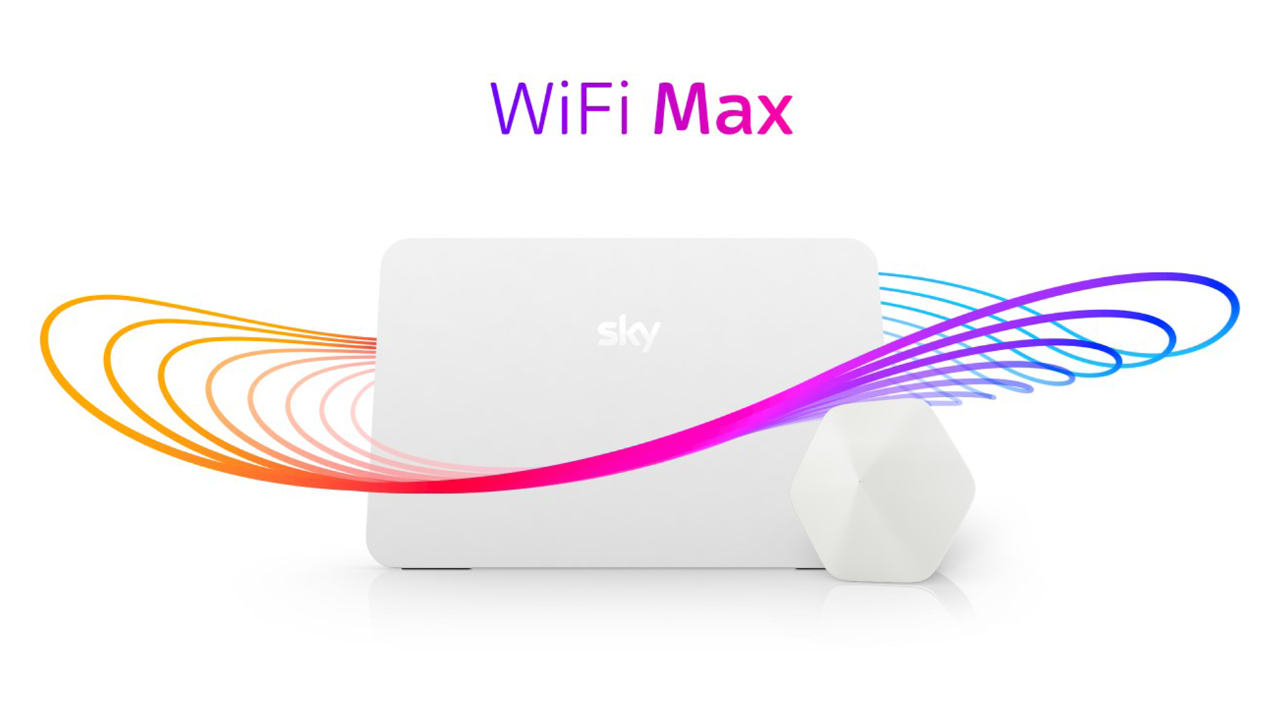
Sky WiFi Max Hub & Boosters
For users subscribing to full-fiber plans or opting for the WiFi Max add-on, Sky supplies an upgraded router equipped with Wi-Fi 6 (802.11ax) capabilities. Key advantages include:
- Enhanced Capacity: Handles up to 100 smart home devices simultaneously without dropping speed.
- Improved Security: Built-in WPA3 encryption alongside network security controls via the My Sky app.
- Wall-to-Wall Coverage Guarantee: Comes with optional mesh extension pods to ensure stable wireless coverage in every room of your property.
Key Benefits of Choosing Sky
- TV and Entertainment Bundling: Sky’s biggest competitive edge is its seamless integration with Sky Stream, Sky Glass, and Sky Q. Bundling television packages with internet services yields noticeable monthly discounts compared to standalone subscriptions.
- Wi-Fi Guarantees: Sky offers minimum speed guarantees on its plans. If your speeds dip below the promised threshold for three consecutive days and cannot be resolved, you can claim a refund on your monthly bill or leave without early exit penalties.
- Parenthood Controls and Security: Through the companion mobile app, account holders can pause Wi-Fi access on individual devices, set bedtimes for children, and enable web filters to block harmful material.
- Reliable Infrastructure: Operating over the Openreach network ensures widespread availability across urban, suburban, and rural areas.
Potential Drawbacks to Consider
- Mid-Contract Price Increases: Like many major UK providers, Sky contracts often include annual price adjustments tied to inflation metrics.
- Upload Speed Asymmetry: While download speeds are exceptional, upload speeds on standard FTTC packages remain modest compared to alt-net providers offering symmetrical speeds.
- Hardware Restrictions: While the Sky Hub performs well for average users, advanced networking enthusiasts may find the administrative router settings somewhat limited compared to third-party equipment.
How Sky Compares to Alternative Providers
When selecting an internet provider, evaluating price against speed and customer service is essential.
- Sky vs. BT: Both use the Openreach network, meaning coverage and technical speed tiers are virtually identical in most areas. BT often sits at a slightly higher price point, whereas Sky offers superior entertainment bundle discounts.
- Sky vs. Virgin Media: Virgin Media operates its own proprietary cable network, offering extremely high download speeds widely across the country. However, Sky generally scores higher in independent customer service satisfaction surveys and provides more flexible television delivery options via broadband streaming.
- Sky vs. Alternative Full-Fiber Networks (Hyperoptic, Community Fibre): Smaller independent full-fiber networks often offer cheaper monthly rates and symmetrical uploads. However, their physical availability is restricted to specific regional cities and streets, whereas Sky maintains near-nationwide availability.
Final Verdict: Is Sky Broadband Worth It?
Sky Broadband represents a highly reliable, well-rounded choice for modern households. It strikes an excellent balance between cutting-edge full-fiber speeds, dependable hardware, and industry-leading entertainment options. If you plan to combine your home internet with premium television and streaming channels, Sky remains one of the most cost-effective and seamless choices available.
