


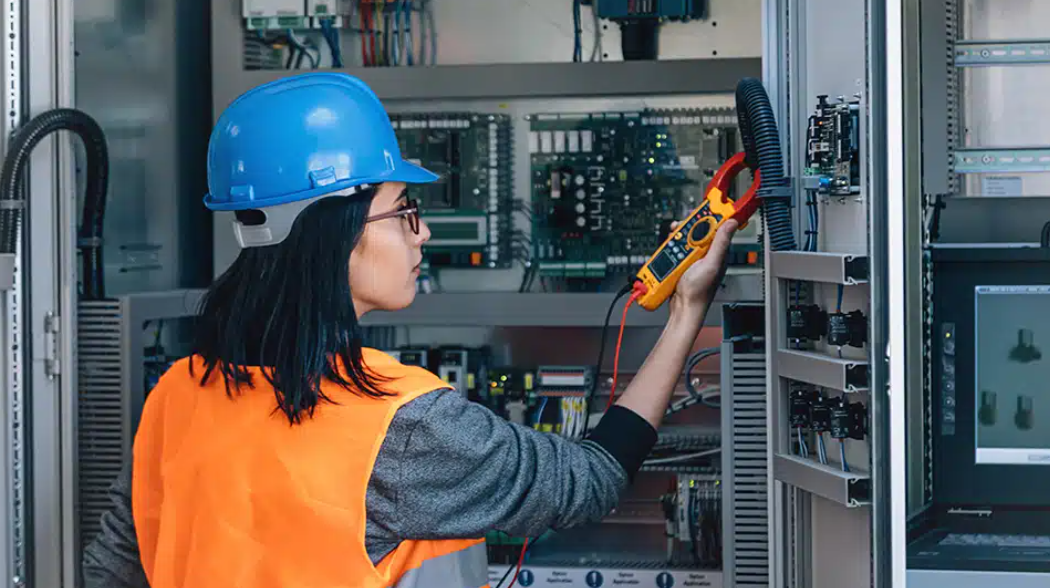
In modern industrial facilities, commercial buildings, and utility grids, electrical safety is non-negotiable. High voltages, sudden power surges, and lightning strikes post constant hazards to life, high-value equipment, and operational uptime. A robust grounding system acts as the baseline defense against catastrophic power anomalies. Dedicated platforms like Safetrode.com focus on supplying state-of-the-art grounding and earthing solutions designed to discharge fault currents safely into the earth.
Understanding the components, engineering principles, and implementation strategies behind advanced grounding systems is essential for electrical engineers, facility managers, and safety compliance inspectors.
Understanding the Role of Advanced Grounding Systems
Grounding—often referred to as earthing—is the process of connecting electrical circuits, equipment enclosures, and structural elements directly to the conductive mass of the earth. The fundamental goal is to establish a low-resistance path for fault currents, ensuring protective devices trip rapidly during short circuits and transient surges.
Conventional earthing setups often rely on basic copper rods driven into the soil. However, modern industrial environments require specialized solutions due to varying soil resistivity, limited ground space, and high short-circuit currents. High-performance earthing electrodes utilize chemical backfills and corrosion-resistant alloys to maintain steady earth resistance across seasonal shifts.
Key benefits of an engineered grounding system include:
- Personnel Protection: Eliminates dangerous touch and step potentials, preventing severe electrical shock.
- Equipment Longevity: Safely dissipates voltage spikes caused by switching operations or indirect lightning strikes.
- Signal Integrity: Provides a clean reference ground for sensitive electronic equipment, reducing signal noise and processing errors.
- Regulatory Compliance: Meets international safety standards set by organizations like the IEEE and IEC.
Core Components of a Complete Safety Network
A complete electrical protection system operates as an interconnected web. Isolating a single element leaves the facility vulnerable to high-voltage exposure.
       +---------------------------------------------+
       |           Lightning Protection              |
       |     (Air Terminals / Down Conductors)       |
       +----------------------+----------------------+
                              |
                              v
       +---------------------------------------------+
       |          Surge Protection Devices           |
       |            (Panel / Main Switchboard)       |
       +----------------------+----------------------+
                              |
                              v
       +---------------------------------------------+
       |         Chemical Earth Electrodes           |
       |          (High-Conductivity Array)          |
       +----------------------+----------------------+
                              |
                              v
       +---------------------------------------------+
       |        Low-Resistivity Soil Backfill        |
       +---------------------------------------------+
- Chemical Earth Electrodes: Unlike standard solid copper rods, chemical electrodes consist of a hollow copper or stainless-steel tube filled with mineral salts. Over time, these salts absorb ambient moisture from the soil and release electrolyte ions through pre-drilled weep holes, continuously conditioning the surrounding soil and lowering local earth resistance.
- Ground Enhancement Material (GEM): A low-resistance conductive backfill applied around electrodes in rocky or high-resistivity soil. It retains moisture and expands slightly to create tight physical contact between the electrode and surrounding earth.
- Equipotential Bonding Conductors: Heavy-gauge copper conductors or busbars that tie together all metallic structures, conduits, and equipment chassis within a facility, keeping all exposed metal at equal voltage potential during fault conditions.
- Surge Protection Devices (SPDs): Installed at main power entrances and distribution sub-panels to clamp high-transient voltage spikes before they reach sensitive microelectronics.
Technical Specification Comparison
Selecting the right electrode type depends heavily on soil conditions, available land area, and expected fault current capacity.
| Specification Feature | Standard Copper Rod | Chemical Earth Electrode | Galvanized Iron (GI) Pipe |
| Primary Material | Solid Copper / Copper-Bonded Steel | Heavy-Duty Electrolytic Copper / Stainless | Hot-Dip Galvanized Mild Steel |
| Average Service Life | 10 to 15 Years | 25 to 30+ Years | 5 to 10 Years |
| Resistance Stability | Fluctuates with soil moisture | Highly stable year-round | Degrades rapidly due to oxidation |
| Maintenance Need | Periodic chemical treatments required | Self-moistening, low maintenance | Regular inspection for rust/corrosion |
| Ideal Application | Low-risk residential circuits | Heavy industrial, telecoms, power plants | Temporary sites, low-budget setups |
| Installation Footprint | Deep driving required (multiple rods) | Shallow or standard boreholes | Standard manual excavation |
Soil Resistivity and Ground Resistance Calculations
Soil resistivity is the primary factor determining the resistance of a grounding system. Soil composition, moisture content, mineral concentration, and temperature directly affect how easily current disperses into the earth.
The theoretical resistance $R$ of a single vertical rod electrode driven into uniform soil can be calculated using the simplified formula:
$$R = \frac{\rho}{2\pi L} \left( \ln\left(\frac{8L}{d}\right) – 1 \right)$$
Where:
- $R$ = Earth resistance in ohms ($\Omega$)
- $\rho$ = Soil resistivity in ohm-meters ($\Omega\cdot\text{m}$)
- $L$ = Length of the electrode in meters ($\text{m}$)
- $d$ = Diameter of the electrode in meters ($\text{m}$)
Because soil resistivity can range from under $10\,\Omega\cdot\text{m}$ in moist clay to over $1000\,\Omega\cdot\text{m}$ in dry sand or solid rock, standard single-rod installations often fail to reach acceptable target resistance levels (typically under $5\,\Omega$ for general distribution and under $1\,\Omega$ for data centers and power stations). In such cases, specialized chemical electrodes surrounded by conductive backfill compounds are required to artificially reduce $\rho$ in the immediate vicinity of the electrode.
Step-by-Step Installation Best Practices
Installing high-performance grounding systems requires strict adherence to engineering standards. Proper installation ensures long-term operational stability and prevents early corrosion failure.
+-----------------------------------------------------------------------------------+
| 1. Site Testing          Measure soil resistivity using 4-point Wenner method     |
+-----------------------------------------------------------------------------------+
                                         |
                                         v
+-----------------------------------------------------------------------------------+
| 2. Borehole Excavation   Drill vertical hole to target electrode length           |
+-----------------------------------------------------------------------------------+
                                         |
                                         v
+-----------------------------------------------------------------------------------+
| 3. Electrode Placement   Position chemical electrode centered in borehole         |
+-----------------------------------------------------------------------------------+
                                         |
                                         v
+-----------------------------------------------------------------------------------+
| 4. Backfill Application  Mix & pour conductive compound around electrode          |
+-----------------------------------------------------------------------------------+
                                         |
                                         v
+-----------------------------------------------------------------------------------+
| 5. Final Connection      Exothermic weld grid conductors & inspect connections    |
+-----------------------------------------------------------------------------------+
Step 1: Soil Resistivity Assessment
Before digging, perform a four-point soil resistivity test using the Wenner method. This establishes the baseline resistivity profile across different soil depths and determines whether multiple parallel electrodes or soil conditioning compounds are necessary.
Step 2: Borehole Preparation
Drill an auger hole slightly larger than the electrode diameter (typically 100 mm to 150 mm in diameter) to the full length of the chemical electrode. Ensure the hole is cleared of loose rock debris.
Step 3: Positioning the Electrode
Place the chemical earth electrode vertically in the center of the borehole. Ensure the moisture-absorbing vents near the top remain above the compacted backfill line while remaining safely inside the protective earth pit chamber.
Step 4: Backfill Application
Prepare the conductive earth enhancement compound by mixing it with water according to manufacturer guidelines. Pour the slurry smoothly around the electrode to completely fill the void between the tube and the surrounding soil walls, eliminating air pockets.
Step 5: Interconnection and Enclosure
Connect the top terminal of the electrode to the main earthing grid using exothermic welding or heavy-duty brass clamps. Install a concrete or heavy-duty polymer inspection pit over the top to allow for future maintenance and periodic resistance testing.
Maintenance and Testing Protocols
A grounding system is only as good as its last test. Over time, physical vibrations, soil erosion, chemical leaching, and corrosion can degrade ground connections.
Facilities should establish a regular maintenance schedule that includes:
- 3-Point Fall-of-Potential Testing: Conducted annually to verify that overall system resistance remains within design limits.
- Visual Connection Inspection: Checking earth pits for loose clamps, heavy oxidation, or physical damage to bonding jumpers.
- Moisture Inspection: Verifying that chemical electrode ports remain clear of debris so atmospheric moisture can enter the internal salt reservoir.
Investing in continuous protection through specialized resources and proven equipment suppliers ensures operational continuity, protecting both personnel and valuable electronics from unpredictable power surges.

1 Comment
Pingback: glorvix com contact