


Pablo Escobar was one of the most powerful and feared drug lords in history. He built a massive drug empire that influenced not only Colombia but the entire world. From humble beginnings to billions of dollars in wealth, his life was full of crime, violence, and power.
In this article, we explore who Pablo Escobar was, how he rose to power, and what led to his downfall. We also look at his legacy and the impact he left behind.
Who Was Pablo Escobar?
Pablo Emilio Escobar Gaviria was born on December 1, 1949, in Rionegro, Colombia. He grew up in a poor family. His father was a farmer, and his mother was a schoolteacher. Even as a young man, Escobar showed signs of ambition and risk-taking.
Early Life Facts:
- Born in Antioquia Department, Colombia
- Middle child in a family of seven
- Dropped out of university before finishing his degree
- Started with petty crimes like stealing cars and selling fake lottery tickets
But soon, Escobar realized that the drug trade offered more money and power than any small crime could.
The Birth of the Medellín Cartel
In the 1970s, Escobar entered the drug trade. He focused on cocaine, which was growing in popularity in the United States. He co-founded the Medellín Cartel, a criminal network that would soon dominate the global cocaine market.
Key Steps to Power:
- Smuggled cocaine into the U.S. using planes, boats, and even submarines
- Built secret labs deep in the Colombian jungle
- Paid off police, judges, and politicians to avoid arrest
- Killed those who refused to cooperate
At its peak, the Medellín Cartel supplied up to 80% of the world’s cocaine.
Escobar’s Wealth and Power
Escobar quickly became one of the richest men in the world. Forbes listed him as a billionaire for seven years in a row. His cartel earned over $20 billion a year at its height.
Signs of His Wealth:
- Owned multiple mansions and luxury cars
- Built his own zoo with exotic animals
- Had private jets and helicopters
- Hid cash in warehouses and fields (some of which remains unfound)
He used his money to gain public support. In Medellín, he built housing for the poor, football fields, and schools. Many locals saw him as a Robin Hood figure.
Violence and Fear
Despite his generosity, Escobar ruled with extreme violence. He believed in the policy of “plata o plomo” — silver or lead. This meant: take the bribe or face death.
Acts of Violence:
- Ordered the killing of over 4,000 people, including judges, police, politicians, and journalists
- Bombed a commercial airplane in 1989, killing 107 people
- Was behind the assassination of Colombia’s presidential candidate Luis Carlos Galán
- Caused chaos in cities through car bombs and shootouts
No one felt safe when Escobar was at the height of his power.
The Government Strikes Back
As Escobar’s crimes grew, so did the efforts to stop him. The Colombian government, with help from the United States, launched a full-scale war against the Medellín Cartel.
Anti-Escobar Operations:
- The U.S. sent DEA agents and military advisors
- Colombia formed a special police unit called the Search Bloc
- A rival group called Los Pepes (People Persecuted by Pablo Escobar) also hunted him
In 1991, Escobar made a deal with the Colombian government. He would surrender if they let him build his own prison. The government agreed.
La Catedral: The Luxury Prison
Escobar’s prison, La Catedral, was not a real prison. It had a bar, a jacuzzi, a soccer field, and even a waterfall. He continued to run his drug empire from inside.
When the government tried to move him to a real prison, Escobar escaped. A massive manhunt followed.
The Fall of Pablo Escobar
For over a year, Escobar was on the run. The government, the U.S., and Los Pepes worked together to find him.
His Death:
- On December 2, 1993, a day after his 44th birthday, authorities located him in Medellín
- He tried to escape across rooftops
- He was shot and killed in a gunfight with Colombian police
Many believe he shot himself to avoid capture, but official reports say police killed him.
The Legacy of Pablo Escobar
Pablo Escobar left behind a legacy of fear, tragedy, and contradiction. Some remember him as a criminal mastermind who caused thousands of deaths. Others recall the philanthropist who helped the poor.
Long-Term Effects:
- Colombia’s image suffered for decades
- The Medellín Cartel collapsed, but other cartels took its place
- His family lives in exile, often changing identities
- His zoo animals escaped and became part of Colombia’s ecosystem (especially the hippos)
The story of Escobar continues to inspire books, documentaries, and TV shows like Narcos.
10 Shocking Facts About Pablo Escobar
- He spent $2,500 a month on rubber bands to hold his cash.
- Rats ate millions of dollars stored in hidden spots.
- He offered to pay off Colombia’s national debt to avoid extradition.
- He once burned $2 million in cash to keep his daughter warm.
- His cartel made up to $60 million a day at its peak.
- He built entire neighborhoods for the poor.
- He had a hit list of over 1,000 people.
- He loved football and supported local teams.
- His hippos still live in Colombia and are now invasive animals.
- He escaped from La Catedral without firing a shot.
How Pablo Escobar Changed the Drug Trade
Escobar changed how the drug world operated. He created a global network and showed how powerful cartels could become. His success led to the rise of other cartels in Mexico, Peru, and Bolivia.
He also changed how governments fought drug trafficking. His reign forced the U.S. to tighten border security and increase foreign aid for anti-drug operations.
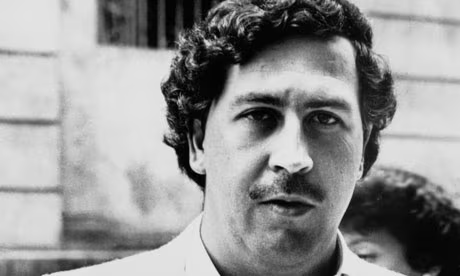
Lessons from Escobar’s Life
Though Escobar gained riches and power, many lessons can be learned from his life:
- Crime has consequences: His empire ended in bloodshed and pain.
- Power built on fear is weak: His own people turned against him.
- Violence only breeds more violence: Thousands died because of his choices.
Conclusion
Pablo Escobar’s story is one of ambition, crime, and tragedy. He rose from poverty to become one of the richest criminals in history. But his path led to violence, suffering, and, ultimately, death.
Today, his legacy remains a warning. No matter how much money or power someone gains, a life of crime comes with a heavy price. For Colombia, Escobar’s time marked a dark chapter. For the world, it showed the true cost of the drug trade.
