


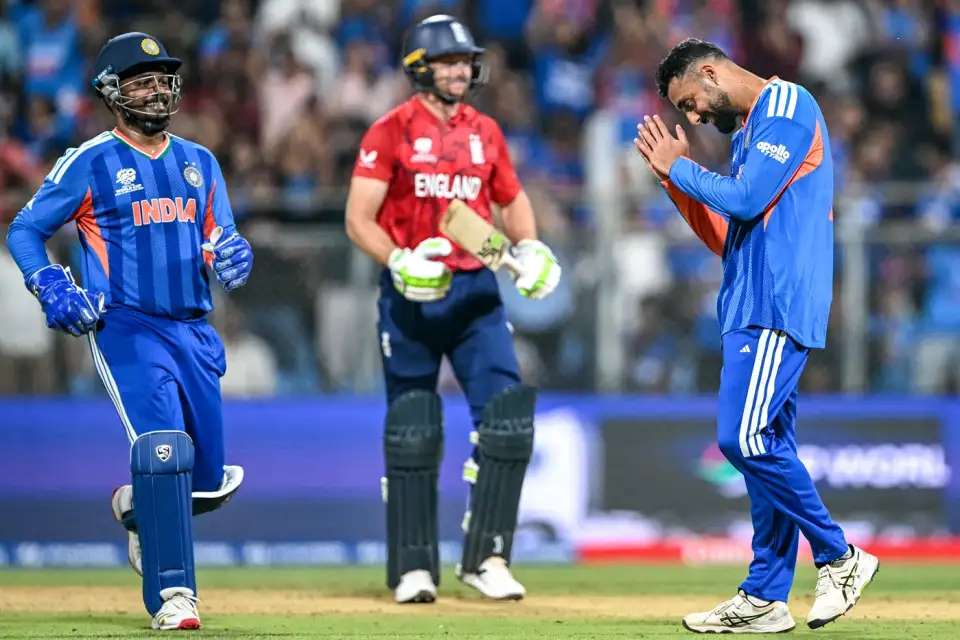
When two nations step onto the sporting field with a shared history that spans centuries, the contest transcends the boundaries of a mere game. The dynamic between the inventors of cricket and the nation that arguably became its spiritual and financial home is a story of evolution, passion, and unparalleled athletic excellence. Every time an India vs England series is announced, stadiums sell out, broadcasting networks prepare for record-breaking viewership, and millions of fans across multiple time zones clear their schedules to witness history unfold.
This deep dive explores the historical context, the legendary players, the unforgettable matches, and the statistical milestones that define one of the greatest rivalries in the sporting world.
The Genesis: From Colonial Origins to Equals
The origins of this sporting rivalry are deeply intertwined with colonial history. Cricket was introduced to the subcontinent by British sailors and soldiers in the 18th century. Initially, it was a game played exclusively by the colonizers, but it soon captured the imagination of the local populace. The first official Test match between the two sides took place at Lord’s in 1932. Led by CK Nayudu, the visiting side put up a spirited performance but ultimately succumbed to a far more experienced host team.
For the first few decades, the relationship on the cricket pitch was lopsided. The creators of the game dominated the early encounters, boasting superior fast bowlers and batsmen who were accustomed to the seaming, swinging conditions of Northern Europe. However, the post-independence era brought a new sense of identity and defiance to the subcontinent’s cricketers. The turning point arrived gradually, built on the backs of legendary spinners and resilient batsmen who began to master the art of playing on varied pitches.
The 1971 Breakthrough
The watershed moment arrived in the summer of 1971. Under the astute leadership of Ajit Wadekar, the visiting team achieved the unthinkable: a series victory on British soil. The hero of this triumph was the enigmatic leg-spinner Bhagwath Chandrasekhar, whose spell of 6 for 38 at The Oval remains etched in cricketing folklore. This victory was not just a sporting triumph; it was a profound cultural statement. It signaled the arrival of a new cricketing powerhouse that could compete with and defeat the traditional masters in their own backyard.
The Modern Era: Aggression, Passion, and Redemption
As the decades progressed, the nature of the contest evolved. The 1980s and 1990s saw incredible individual performances, from Kapil Dev’s heroics in the 1986 series victory to Graham Gooch’s monumental 333 at Lord’s in 1990. However, the turn of the millennium brought a distinct shift in attitude. The deferential approach of the past was replaced by a fierce, combative spirit.
The Sourav Ganguly and Nasser Hussain Era
The early 2000s marked a noticeable shift in aggression. Captains like Sourav Ganguly and Nasser Hussain built teams that refused to take a backward step. The iconic moment of Ganguly waving his shirt on the Lord’s balcony in 2002 after a miraculous run chase changed the face of India vs England white-ball encounters forever. It was a declaration that the new generation would fight fire with fire. This era also saw the rise of tremendous fast-bowling talents and aggressive opening batsmen who were unafraid to counter-attack.
Anderson vs Kohli: A Duel for the Ages
No modern rivalry is complete without discussing the individual battles that define it. The contest between James Anderson, the master of swing, and Virat Kohli, the modern batting maestro, is the stuff of legend.
During the 2014 tour, Anderson exposed Kohli’s vulnerability outside the off-stump, dismissing him multiple times and keeping him to a meager average. It was a humbling experience for the batsman. However, the redemption arc in 2018 was spectacular. Kohli returned with a modified technique, playing the ball late and leaving with immense discipline. He conquered his demons, scoring hundreds in trying conditions, even as Anderson continued to bowl with mesmerizing skill. This personal duel encapsulated the broader narrative of the teams: a constant cycle of challenge, adaptation, and ultimate respect.
The Subcontinent Fortresses
While the visiting teams have occasionally triumphed away from home, winning in the opponent’s territory remains the ultimate prize. In 2012, Alastair Cook’s men achieved a historic series win in the subcontinent, built on Cook’s marathon centuries and Kevin Pietersen’s swashbuckling 186 in Mumbai on a violently turning pitch. Spinners Graeme Swann and Monty Panesar out-bowled their local counterparts, creating a blueprint for success in dusty conditions.
Conversely, the hosts have turned their home grounds into impenetrable fortresses over the last decade. With a spin attack led by Ravichandran Ashwin and Ravindra Jadeja, visiting batsmen are routinely subjected to a trial by spin, where the ball grips, turns, and bounces unpredictably. The aggressive “Bazball” approach adopted by Ben Stokes and Brendon McCullum recently attempted to dismantle this fortress, leading to fascinating tactical battles where extreme attacking intent met unrelenting spin mastery.
Statistical Overview: A Clash of Titans
To truly understand the magnitude of this rivalry, one must look at the numbers. The statistics tell a story of fluctuating dominance, eras of supremacy, and closely fought battles.
Test Matches
Test cricket remains the pinnacle of the sport, and the head-to-head record reflects decades of intense, attritional battles across varying conditions—from the cloudy, green pitches of Trent Bridge to the dry, spinning tracks of Chennai.
| Metric | Total |
| Matches Played | 136 |
| Host Victories | 55 |
| Visitor Victories | 35 |
| Drawn Matches | 46 |
One Day Internationals (ODIs)
The introduction of limited-overs cricket brought a new dimension to the rivalry. The colorful clothing, white cricket balls, and floodlights created spectacular entertainment. The two nations have contested some of the most thrilling World Cup encounters in history.
| Metric | Total |
| Matches Played | 107 |
| Host Victories | 58 |
| Visitor Victories | 44 |
| Tied Matches | 2 |
| No Result | 3 |
Twenty20 Internationals (T20Is)
The shortest format of the game has seen rapid evolution, with both teams pioneering new strategies, aggressive batting templates, and innovative bowling variations.
| Metric | Total |
| Matches Played | 23 |
| Host Victories | 12 |
| Visitor Victories | 11 |
| Tied / No Result | 0 |
(Note: Statistics are approximate reflections of historical data up to recent major tours).
Unforgettable Encounters
Certain matches are forever etched into the memories of fans. They are replayed on television networks, analyzed by pundits, and passed down as folklore to younger generations. Here are five defining matches that shaped the legacy of this contest:
- The NatWest Series Final (2002, Lord’s):
Chasing an imposing target of 326, the chasing team was reduced to 146 for 5, with their premier batsmen back in the pavilion. What followed was a miraculous partnership between two youngsters, Yuvraj Singh and Mohammad Kaif. They combined fearless strokeplay with desperate running between the wickets, securing a thrilling two-wicket victory in the final over. It remains one of the greatest ODI chases in history. - The Chennai Test (2008):
Played against the somber backdrop of the tragic Mumbai terror attacks, this Test match carried immense emotional weight. Set an improbable target of 387 in the fourth innings, the hosts launched a stunning counter-attack. Virender Sehwag decimated the bowling attack with a rapid 83, before Sachin Tendulkar anchored the chase with a sublime, unbeaten century. Tendulkar dedicated the emotional victory to the victims of the attacks. - The Inaugural T20 World Cup (2007, Durban):
In a high-pressure group stage match, an on-field altercation between Andrew Flintoff and Yuvraj Singh sparked fireworks. Fired up by the exchange, Yuvraj unleashed his fury on a young Stuart Broad in the very next over, hitting him for six consecutive sixes. It was a display of clean, brutal hitting that cemented Yuvraj’s status as a white-ball legend and swung the momentum of the entire tournament. - The Lord’s Test (2021):
A match that defined modern tactical aggression. On the final day, the hosts seemed destined to lose after early wickets fell. However, tailenders Mohammed Shami and Jasprit Bumrah orchestrated an unbelievable, unbroken 89-run partnership, surviving short-pitched bowling and intense verbal barrages. Fired up by the confrontation, the bowling attack then dismantled the opposition in exactly 60 overs, securing a dramatic 151-run victory as the sun set over London. - The World Cup Tie (2011, Bangalore):
A group-stage encounter that produced exactly 676 runs. Sachin Tendulkar scored a masterful 120, setting a daunting target of 338. In response, Andrew Strauss played the innings of his life, scoring a magnificent 158. The match ebbed and flowed with agonizing tension until the very last ball, ultimately ending in a dramatic tie. It was a showcase of ODI cricket at its absolute zenith.
The White-Ball Revolution
While Test cricket provides the foundation, the limited-overs formats have seen fascinating strategic shifts. The 2015 World Cup disaster prompted a complete overhaul of the British white-ball strategy. Under Eoin Morgan, they adopted a fearless, hyper-aggressive approach that revolutionized ODI cricket. This culminated in their dramatic 2019 World Cup victory.
Conversely, the subcontinent team consistently produced the world’s most prolific white-ball top order, anchored by Rohit Sharma, Shikhar Dhawan, and Virat Kohli. When these two philosophies clash, it guarantees fireworks. A prime example was the 2022 T20 World Cup semi-final in Adelaide, where Alex Hales and Jos Buttler decimated a formidable bowling attack to win by 10 wickets, showcasing the ruthless efficiency of modern batting templates.
Women’s Cricket: Forging a New Legacy
The intensity of this rivalry is not confined to the men’s game. Women’s cricket has witnessed its own set of historic battles between these two nations, fundamentally elevating the global profile of the sport.
The undisputed pinnacle of this growing rivalry occurred during the 2017 Women’s World Cup Final, hosted at a sold-out Lord’s. The visitors were cruising toward the target, largely due to a brilliant innings from Punam Raut. However, a sensational, match-winning spell of fast bowling from Anya Shrubsole (who took 6 wickets for 46 runs) triggered a dramatic collapse. The hosts snatched victory from the jaws of defeat by just 9 runs.
This match was a watershed moment for the women’s game globally. It drew record television audiences and proved that the drama, skill, and narrative of women’s international cricket could captivate the world just as powerfully as the men’s game. Players like Mithali Raj, Jhulan Goswami, Heather Knight, and Nat Sciver-Brunt have since headlined numerous thrilling bilateral series, ensuring that the legacy of this contest continues to expand across all facets of the sport.
The Pitch and Weather: The Silent Arbiters
One cannot discuss this matchup without acknowledging the profound impact of geography and climate. In the Northern Hemisphere, the game is dictated by the Dukes ball, overcast skies, and lush green outfields. Fast bowlers look for swing in the air and seam movement off the pitch. Batsmen must possess watertight techniques, playing the ball late and under their eyes to survive.
Conversely, touring the subcontinent presents a completely different geographical challenge. The SG ball, baked pitches, and oppressive heat transform the contest into a battle of endurance. Spinners come into play as early as the first morning, exploiting the dust and footmarks. Batsmen must employ soft hands, precise footwork, and the ability to play the sweep shot effectively. This massive contrast in playing conditions is what makes winning away from home the ultimate barometer of a team’s greatness.
The Twelfth Man: Barmy Army and Bharat Army
An India vs England match is incomplete without the fans. The atmosphere generated by the supporters adds an intoxicating layer of drama to the proceedings.
On one side, you have the Barmy Army. Born in the mid-1990s, this dedicated group of traveling supporters follows their team across the globe. Armed with trumpets, witty chants, and relentless optimism, they provide a constant soundtrack to the day’s play, attempting to lift their players during grueling sessions in the blazing heat.
On the other side, you have the Bharat Army. Established in 1999, they represent the massive global diaspora. They bring the vibrant, festival-like atmosphere of the subcontinent to stadiums worldwide. The beating of the dhol (traditional drums), the passionate roars for every boundary, and the synchronized chanting create a cauldron of noise that can intimidate any opposition.
When these two fan bases converge—whether at Edgbaston, the MCG, or the Wankhede Stadium—the result is a carnival of color, noise, and mutual respect. The banter is sharp but good-natured, reflecting the shared love for the sport that binds these distinct cultures together.
The Financial and Structural Impact
Beyond the boundary ropes, these two nations represent the financial pillars of the global game. The massive television broadcast deals, sponsorships, and digital engagement generated whenever these teams meet provide crucial revenue that sustains the sport globally.
The rise of franchise leagues, particularly the Indian Premier League (IPL), has added another layer of complexity to the relationship. English players, once hesitant to participate due to scheduling conflicts, are now marquee signings in the league. Spending months in the subcontinent, sharing dressing rooms with local stars, has demystified the conditions for foreign players and fostered genuine friendships across battle lines. However, when international duty calls, those friendships are temporarily shelved, replaced by the fierce desire to claim national supremacy.
Looking Ahead: What the Future Holds
As we look toward the future, the landscape of international sport is rapidly shifting. The proliferation of T20 leagues, concerns over player burnout, and the continuous evolution of tactics mean that the next chapter of this rivalry will look different from the last.
Will the aggressive, high-risk approach of Bazball permanently alter how Test cricket is played in spinning conditions? Can a new generation of fast bowlers replicate the longevity and skill of James Anderson and Stuart Broad? Who will step into the massive shoes of Virat Kohli and Rohit Sharma to carry the batting mantle for the subcontinent?
These questions will be answered on the 22-yard strip over the coming years. What remains absolutely certain is that the intensity will not wane. The intricate dance between bat and ball, the tactical chess matches between captains, and the roaring crowds will continue to define the sport. Ultimately, an India vs England clash is more than just a contest of athletic prowess; it is a celebration of history, culture, and the enduring magic of a game that unites and divides in equal measure. The legacy of this great cricketing narrative is secure, and its future promises to be just as breathtaking as its storied past.
