


Introduction
Household waste is often created through small daily choices. A plastic bag from a quick store visit, a disposable cup, an extra packaged snack, or a product bought without planning may seem minor. But when these choices happen repeatedly, they create a large amount of waste over time.
The positive side is that small better choices also add up. Reducing household waste does not require a perfect zero-waste lifestyle. It starts with practical habits that are easy to repeat and realistic for your household.
Identify Everyday Waste Patterns
Before reducing waste, it helps to understand where it comes from. Spend a few days noticing what your household throws away most often.
Common sources include:
- Plastic shopping bags
- Food packaging
- Paper towels
- Disposable cups
- Takeout containers
- Bathroom product bottles
- Unused food
- Packaging from online orders
This simple observation can show where changes will have the biggest effect. For example, if most waste comes from grocery shopping, focus on better shopping habits first. If it comes from takeout, start by reducing disposable containers and cutlery.
Replace Single-Use Items Gradually
Trying to replace every disposable item at once can feel overwhelming. A gradual approach is easier to maintain and less expensive.
Start with common swaps such as:
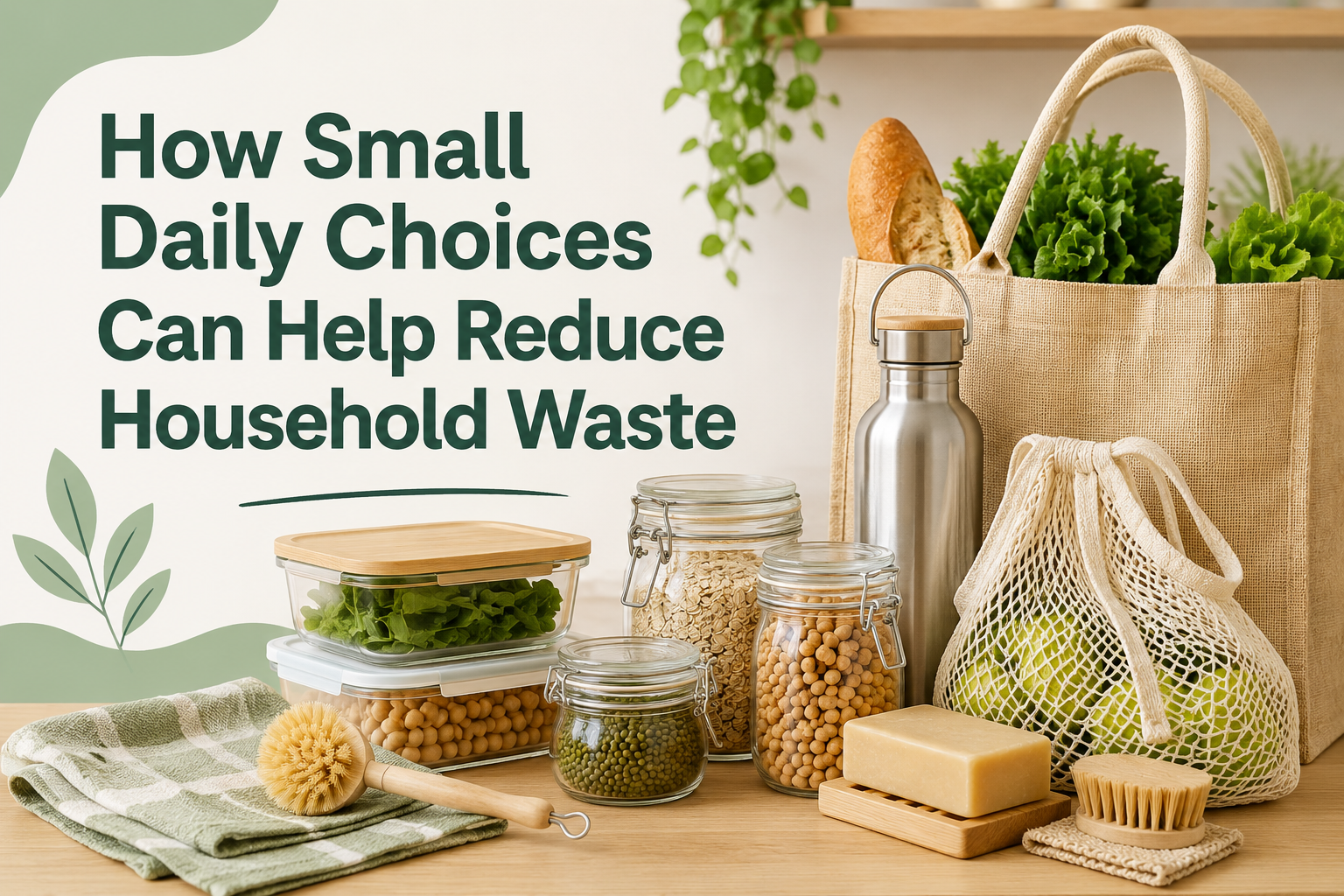
- Cloth towels instead of paper towels
- Refillable bottles instead of bottled drinks
- Reusable containers instead of plastic wrap
- Reusable shopping bags instead of disposable bags
- Reusable lunch boxes instead of single-use bags
For shopping, errands, and daily carry, eco-friendly tote bags are practical because they are easy to use repeatedly and can handle many types of items.ly tote bags are practical because they are easy to use repeatedly and can handle many types of items.
Shop With More Intention
Waste often begins before products enter the home. Shopping with intention can reduce packaging, clutter, and unused items.
Helpful habits include:
- Make a list before shopping
- Check what you already have
- Avoid impulse purchases
- Choose products with less packaging
- Buy only what your household can finish
- Choose durable items over disposable ones
Intentional shopping can also save money because fewer products are wasted or forgotten.
Reuse and Repurpose More Often
Before throwing something away, ask whether it can be used again. Many household items can have a second life.
Examples include:
- Glass jars for storage
- Boxes for organizing drawers
- Old clothing as cleaning rags
- Bags for seasonal storage
- Paper bags for recycling collection
- Containers for craft supplies
Reuse works best when it is practical. Keep only what you will actually use, and avoid saving too many items “just in case.”
Make Waste Reduction Convenient
Convenience is the key to lasting habits. If reusable items are hard to find, they will be forgotten. Put them where they are needed.
Try placing:
- Bags near the door
- Containers near the fridge
- Cloth towels near the sink
- Refill bottles on the counter
- Recycling bins in easy locations
When sustainable choices are visible and easy, they become part of the routine.
Conclusion
Reducing household waste is the result of many small decisions. By identifying waste patterns, replacing single-use items gradually, shopping intentionally, reusing more often, and making sustainable choices convenient, households can reduce waste without feeling overwhelmed.
