


There are some journeys that live quietly on your bucket list, and others that feel like they’re calling you from the moment you hear about them. For me, Mount Kilimanjaro was always in the second category. The idea of standing at the highest point in Africa — nearly six thousand metres above sea level — felt impossibly far away for years. But once I made the decision to attempt it, everything changed. It stopped being a fantasy and started becoming a plan.
I’ve travelled to many places, but nothing has challenged or changed me quite like this climb. Kilimanjaro isn’t just a destination. It’s a test of patience, endurance, and humility — a journey that unfolds as much within you as around you.
Preparing for the Challenge
Like many people, I started by researching how to climb Kilimanjaro. What I discovered surprised me: it isn’t a technical climb. There are no ropes, no ice axes, no vertical walls to conquer. The real challenge is the altitude and the endurance it demands. That knowledge helped shape my preparation. I trained by hiking long distances on weekends, building leg strength and cardiovascular fitness, and learning to pace myself — skills that would become essential on the mountain.
One of the most important questions I had at the start was: how long does it take to climb Kilimanjaro? The answer varies, but most climbers spend between six and nine days on the mountain. Faster ascents are possible, but they significantly increase the risk of altitude sickness. I chose a seven-day trek — long enough to allow my body to acclimatise, but not so long that fatigue would become overwhelming.
The Climb Begins
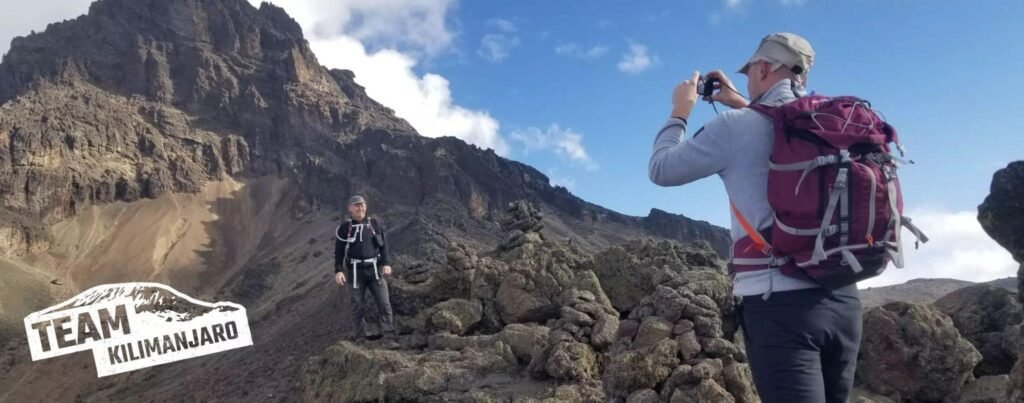
From the moment we set off from the trailhead, it was clear that Kilimanjaro isn’t a single landscape — it’s several worlds stacked on top of one another. The first day wound through dense rainforest, where the air was humid and alive with birdsong. By the second day, the forest had given way to heather and moorland. By the third, I was walking across a stark alpine desert, the summit still far above but finally visible on the horizon.
“Pole pole,” the guides repeated — Swahili for “slowly, slowly.” It became our mantra. Rushing is the enemy of altitude. Progress is measured not in speed but in persistence. That lesson, simple but powerful, shaped every step of the journey.
Evenings on the mountain had their own rhythm. Campsites were lively with conversations between trekkers from around the world, each with a different reason for being there. Meals were simple but nourishing, and the night skies were unlike anything I’d ever seen — an ocean of stars above a sleeping continent.
Summit Day: The Long Night
Summit night began at midnight. Headlamps cut narrow tunnels of light into the darkness as we climbed, each step heavier than the last. The altitude made every breath a deliberate act. There were moments when I wondered if I could continue. But step by step, the summit drew closer.
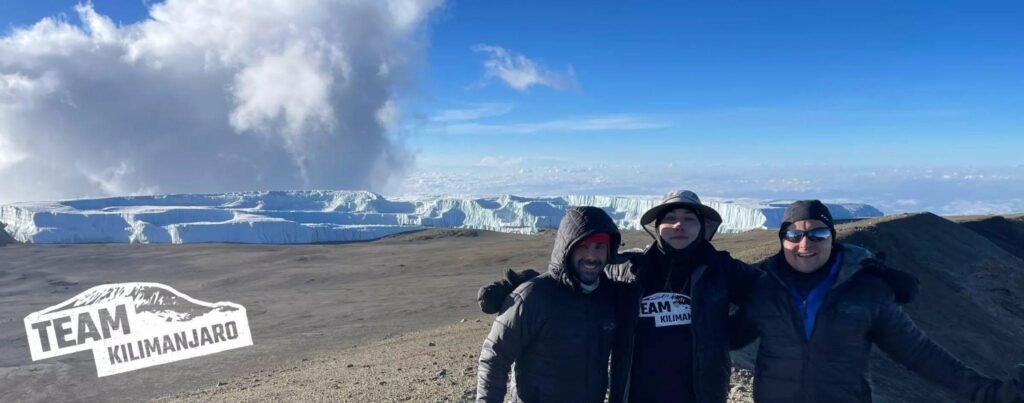
Just before dawn, the first glow of sunlight appeared on the horizon. It was enough to lift my spirits for the final push. When I reached Uhuru Peak — the highest point in Africa — the sky exploded in colour. The sense of achievement was overwhelming, but so was the silence. The wind, the vastness, the sheer scale of the view — it was humbling. All the exhaustion, all the doubts, vanished in that moment.
Choosing the Best Time to Go
If you’re planning your own climb, timing is crucial. The best time to climb Kilimanjaro is during the dry seasons: January to March or June to October. These months offer clearer skies, more stable weather, and drier trails. I climbed in early September, when the conditions were ideal — cool mornings, warm afternoons, and spectacular visibility from the summit.
The wet seasons (April to May and November) are less popular, but they offer quieter trails and lush scenery on the lower slopes. They come with more challenges, too: muddy paths, hidden views, and unpredictable weather. Whether you choose peak season or a quieter window, preparation and flexibility are key.
What the Mountain Teaches
Kilimanjaro is not just a physical challenge. It’s a teacher. It teaches patience, because progress is slow and deliberate. It teaches resilience, because there are moments when you’ll want to stop. And it teaches humility, because the mountain is bigger, older, and stronger than you will ever be — and yet it welcomes you to its summit if you approach with respect.
I returned home with a deeper appreciation not only for the landscapes I’d crossed but for the journey itself. The climb wasn’t just about reaching a geographical point on a map. It was about testing the limits of what I thought I could do — and discovering that those limits were far higher than I had believed.
Final Thoughts
For anyone who dreams of adventure, climbing Kilimanjaro deserves a place near the top of the list. It’s accessible to ordinary people who prepare properly. It’s safe when guided by experienced professionals. And it’s one of the most rewarding experiences travel can offer — not just a trip to the top of a mountain, but a journey into the heart of what you’re capable of.
I went to Tanzania seeking the top of Africa. What I found was something far greater: a reminder that the most meaningful travel experiences are the ones that change the way you see yourself.
