


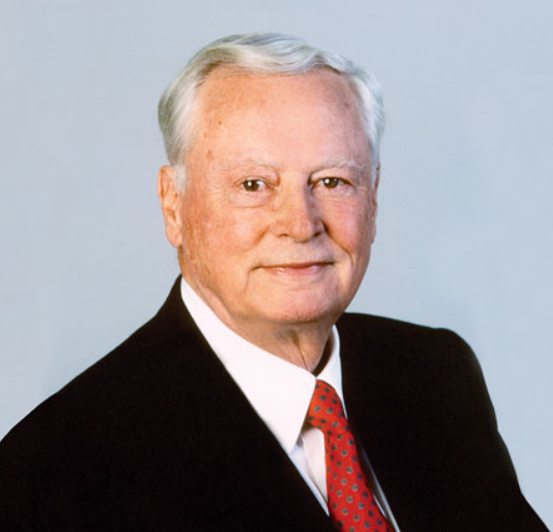
The story of modern hospitality, sports enterprise, and monumental philanthropy is incomplete without exploring the life of William Barron Hilton. Often overshadowed in popular culture by his famous descendants, he was the quiet powerhouse who took a family hospitality brand and turned it into an undisputed global empire.
As an entrepreneur, sports pioneer, and dedicated pilot, he carved out a legacy that was entirely his own. He was a man who balanced a fierce corporate competitiveness with a deep-seated commitment to human welfare, eventually giving away almost his entire multi-billion-dollar fortune to help those in need.
Early Life: Growing Up in the Shadow of a Giant
Born on October 23, 1927, in Dallas, Texas, William Barron Hilton was the second son of Conrad Nicholson Hilton, the legendary founder of the hotel chain, and Mary Adelaide Barron. Growing up during the Great Depression, he witnessed firsthand the immense struggles and eventual triumph of his father’s business ventures.
His childhood was far from tranquil. His parents divorced when he was only eight years old. He spent much of his youth moving between boarding schools, famously admitting later in life that he had a rather rebellious phase and was asked to leave several educational institutions.
The Call of the Skies
Rather than finding his initial calling in the lobbies of grand hotels, he fell in love with the open sky. At just 17 years old, he learned to fly, a passion that would remain with him for the rest of his life. During World War II, he joined the United States Navy, serving as a photographer’s mate at Pearl Harbor. Following his discharge, he continued his aeronautical training at the University of Southern California, earning his twin-engine flight rating at age 19.
Rather than jumping directly into the family business under his father’s wing, he chose to prove his entrepreneurial mettle independently. Using his own savings and small investments, he bought a local citrus product distributorship, founded an aircraft leasing business called Air Finance Corporation, and launched a pioneering credit card system. This decade of independent business operation gave him the hard-nosed experience needed to later lead one of the world’s largest public corporations.
A Pioneer in Professional Sports
Before he took the reins of the hospitality empire, he made a massive mark on American sports history. In 1959, he was approached by Lamar Hunt to help establish a new professional football league to challenge the dominant National Football League (NFL).
He jumped at the chance, founding the Los Angeles Chargers in 1960 as one of the charter members of the American Football League (AFL).
[AFL Foundation (1960)] ──> [Moved to San Diego (1961)] ──> [AFL-NFL Merger (1966)]
After a challenging inaugural season in Los Angeles, he moved the franchise to San Diego in 1961. Under his ownership, the San Diego Chargers became a dominant force, reaching the AFL Championship game five times and winning the league title in 1963.
More importantly, he played an instrumental role in negotiating the historic merger agreement between the AFL and the NFL in 1966, which paved the way for the creation of the modern Super Bowl. Shortly after the merger was finalized, the board of directors of his family’s company insisted that he step down from his sports responsibilities to focus entirely on the corporate empire, forcing him to sell his majority stake in the Chargers.
Transforming the Global Lodging Landscape
In 1966, he assumed the role of President and Chief Executive Officer of the hotel corporation. When he took charge, the company was a respected domestic chain, but it had yet to realize its full global potential. Over the next three decades, he fundamentally reshaped how the hospitality industry operated.
Key Business Milestones Under His Leadership
- The Move Into Gaming (1971): He made his company the first New York Stock Exchange-listed firm to enter the casino gaming industry. By acquiring the Las Vegas Hilton and the Flamingo Hilton, he unlocked a highly lucrative revenue stream that carried the company through various economic recessions.
- Innovative Franchising: He pioneered the franchise model on a massive scale, allowing the brand name to expand rapidly across the globe without requiring the capital-intensive acquisition of physical real estate.
- The Carte Blanche Card: Recognizing the future of consumer finance, he helped popularize the use of travel and entertainment credit cards, integrating hospitality with modern payment solutions.
| Metric | 1966 (When He Took Over) | 2007 (When Sold) |
| Total Hotels | 50 properties | ~3,000 properties |
| Total Guest Rooms | 28,500 rooms | ~490,000 rooms |
| Global Footprint | Primarily United States | 76 Countries & Territories |
| Market Innovation | Standard Lodging | Las Vegas Gaming & Global Franchising |
The Legal Battle of a Lifetime
When Conrad Hilton passed away in 1979, his will sent shockwaves through the family. The patriarch had left nearly all of his wealth—specifically, his massive block of shares in the hotel corporation—to the Conrad N. Hilton Foundation, a charitable entity he established in 1944. He left only a comparatively modest cash inheritance to his children.
The Stock Option Dispute
He felt that his father’s will threatened the stability of the company. If the charity was forced to sell the massive block of stock to comply with federal regulations regarding private foundations, it could lead to a hostile takeover or the dismantling of the family business.
He initiated a decade-long legal challenge based on a key provision: a stock option agreement he had signed with his father in the 1950s that allowed him to purchase a significant portion of the shares to maintain family control.
In 1989, a settlement was finally reached. The shares were split, giving him direct control over a substantial portion of the equity while ensuring that the foundation remained incredibly well-funded. Rather than keeping this hard-won wealth for his personal descendants, this settlement set the stage for one of the greatest philanthropic acts of the 21st century.
Personal Life: Family, Aviation, and the Great Outdoors
Behind his sharp corporate suits was an avid outdoorsman and adventurer. He married his childhood sweetheart, Marilyn June Hawley, in 1947. Their marriage was famously stable and enduring, lasting 57 years until her passing in 2004. Together, they raised eight children: Ronald, William, Hawley, Stephen, David, Sharon, Richard, and Daniel.
Through his son Richard, he became the grandfather of pop-culture icons Paris Hilton and Nicky Hilton. While the younger generations of the family frequently captured tabloid headlines with their lavish lifestyles, he maintained a far quieter, highly disciplined existence, focused on business operations and personal passions.
William Barron Hilton ── married ── Marilyn June Hawley
│
┌─────────────────────────────────┴────────────────────────────────┐
Richard Hilton (Son) ── married ── Kathy Avanzino Stephen Hilton (Son)
│ (Former Foundation President)
┌────────────┴────────────┐
Paris Hilton Nicky Hilton
The Flying Ranch
His true sanctuary was the Flying M Ranch, a spectacular 750,000-acre property in northern Nevada. Here, he hosted some of the world’s most accomplished aviators, astronauts, and adventurers. He flew gliders, hot air balloons, and biplanes, showcasing a child-like wonder for flight well into his eighties.
He established the Barron Hilton Cup, which became one of the most prestigious soaring competitions in the world, encouraging glider pilots from every continent to push the limits of unpowered flight.
A Generous Philanthropic Legacy
In 2007, he made an announcement that stunned the business world but perfectly aligned with his family’s deeply ingrained values. He pledged that upon his death, 97% of his entire personal fortune—then valued at approximately $2.3 billion—would be donated to the Conrad N. Hilton Foundation.
When he passed away peacefully of natural causes at his home in Los Angeles on September 19, 2019, at the age of 91, this pledge was carried out. His monumental gift instantly doubled the foundation’s endowment, transforming it into one of the largest humanitarian grant-making organizations in the United States.
How the Philanthropy Works
The billions of dollars left behind by his estate are not used to build monuments or corporate headquarters. Instead, they are distributed to organizations working on the frontlines of human suffering.
The funding is targeted toward several key areas:
- Clean Water Access: Funding sustainable clean water and sanitation initiatives in developing countries across Africa and Latin America.
- Supporting Catholic Sisters: Continuing his father’s deeply personal mission of supporting congregations of religious women who provide education, healthcare, and social services to the most vulnerable populations globally.
- Preventing Homelessness: Driving innovative housing first initiatives in major American metropolitan areas, particularly Los Angeles.
- Disaster Relief: Providing rapid-response funding to communities devastated by natural disasters and humanitarian crises.
Lessons from a Life of Discipline and Vision
His life offers several profound lessons for modern entrepreneurs, leaders, and families:
“Success is not just about what you build during your lifetime; it is about how you ensure those assets serve humanity long after you are gone.”
- Pioneer Outside Your Comfort Zone: He did not rely solely on the hospitality industry. He proved his capabilities in aviation, credit card systems, and professional sports before taking over the family business.
- Protect the Brand, But Give Back: While he fought a fierce court battle to protect the corporate stock of his family’s company, his ultimate goal was to ensure those resources would eventually go to charity rather than simple personal enrichment.
- Value Discipline Over Celebrity: Despite being surrounded by immense wealth and growing family fame, he remained a grounded executive, focusing his free time on quiet outdoor pursuits and flight.
His journey is a testament to the power of combining business brilliance with a social conscience. By taking a successful brand and scaling it to unprecedented heights, he created the financial engine that now works daily to relieve human suffering across the globe. He was a true titan of industry, whose greatest success was not the hotels he built, but the lives he continues to change through his incredible generosity.
