


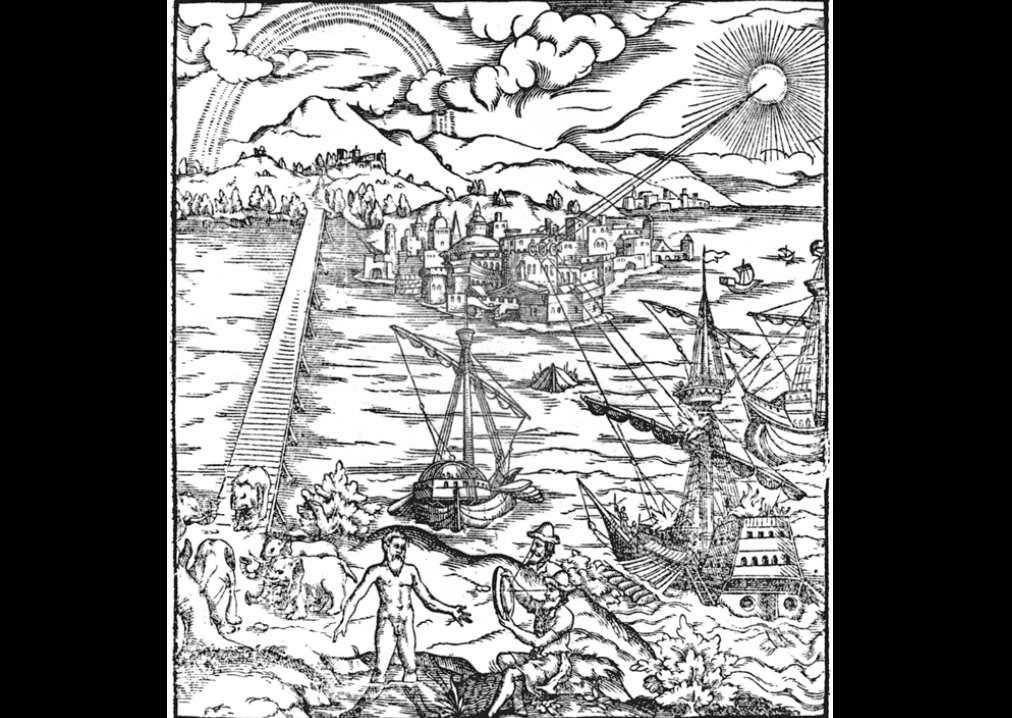
The emission theory of vision is an ancient idea about how we see. Long before science explained light and optics as we know them today, early thinkers developed their own concepts of vision. One such idea was the emission theory. Despite being outdated today, it played a major role in the history of visual perception. This article explores the theory in detail, from its origin to its failure and how it helped build modern optics.
What Is the Emission Theory of Vision?
The emission theory of vision says that the eyes send out rays or particles that touch objects. The object then becomes visible when these rays hit it. In other words, we see things because our eyes reach out to them, not because light comes in.
This theory contrasts with our current understanding. Today, we know vision works because light enters the eye, not the other way around. But in ancient times, emission theory helped explain visual effects people observed. It was especially popular in Greek philosophy.
Who Proposed the Emission Theory?
The emission theory of vision goes back thousands of years. Several famous Greek scholars supported it:
1. Plato (around 428–348 BCE)
- Proposed that the eyes emit a kind of light.
- Believed vision happens when this light mixes with daylight.
- Thought of vision as tied to the soul and reason.
2. Euclid (around 300 BCE)
- Wrote Optics, one of the earliest known works on vision.
- Treated visual rays as straight lines from the eyes.
- Used the theory to explain geometry of vision, not biological processes.
3. Ptolemy (circa 100–170 CE)
- Expanded on earlier ideas using math and experiments.
- Combined emission theory with reflection and refraction.
- Tried to explain how mirrors work using rays from the eyes.
While the theory began much earlier, these thinkers made it known to the world. Their ideas shaped vision science for over a thousand years.
Core Beliefs of the Emission Theory
The emission theory relies on a few basic ideas. These are simple, but they sound strange today.
Key Concepts:
- Eyes produce visual rays or fire that reaches out to objects.
- Sight happens instantly when the eye-rays hit an object.
- Vision requires light, but not because light enters the eyes — instead, it allows eye-rays to travel.
This view satisfied ancient questions like “Why can’t we see in the dark?” They claimed fire (in the eye) needs outer light to work properly.
How the Emission Theory Tried to Explain Vision
Early thinkers used emission theory to answer visual puzzles such as:
- Distance Perception: Rays leave the eye and measure space.
- Speed of Sight: If rays move fast from the eye, it explains why we see instantly.
- Reflection: Eyes send rays that bounce off mirrors to return an image.
- Clarity: Stronger or clearer rays produce sharper images.
These explanations seemed logical at the time. They helped model how humans interact with objects using sight.
Why People Believed It
There were several reasons why the emission theory of vision lasted so long:
1. Lack of Tools
- No lenses or microscopes.
- No way to study light waves or retinal activity.
2. Philosophical Bias
- The Greeks admired reason and believed the eyes had power.
- Vision tied into ideas of the soul and intellect.
3. Early Geometry
- Vision described using math and angles.
- Euclid’s models made geometric sense.
People trusted theory when it lined up with simple logic, even without proof. That’s why it remained popular for centuries.
Rejection of the Emission Theory
Over time, science advanced. Experiments no longer supported emission theory. Several thinkers helped overturn it.
Major Critics and Successors:
1. Alhazen (Ibn al-Haytham) – 11th Century
- Father of modern optics.
- Proposed the intromission theory — vision happens when light enters the eyes.
- Said rays come from objects, not the eyes.
- Did experiments to prove it.
2. Johannes Kepler – 17th Century
- Explained how light focuses on the retina.
- Described the image formation inside the eye.
- Connected mathematics and biology.
3. Isaac Newton – 17th Century
- Studied light and color.
- Supported some parts of emission ideas (like particles).
- His corpuscular theory of light focused more on light itself, not vision rays.
Eventually, scientists agreed: Vision results from light entering the eye, reflecting off objects, and forming images on the retina.
Problems with the Emission Theory
As experiments became more accurate, scientists saw many flaws in emission theory.
Common Criticisms:
- Why can’t we see in pitch darkness if eyes send light?
- If eyes emit rays, why don’t we see beams shoot from eyes?
- Rays weren’t seen or measured.
- Speed and path of rays couldn’t explain illusions or visual delay.
- Theory didn’t match anatomy or eye structure.
These flaws made the theory less useful with time. As better tools emerged, the theory fell out of favor.
Modern Understanding of Vision
Today, science knows exactly how vision works. The intromission theory and later wave-particle theories of light explain it best.
How Vision Really Works:
- Light travels in waves and particles (photons).
- It reflects off objects.
- Light enters the cornea and goes to the retina at the back of the eye.
- Special cells (rods and cones) detect the light and its color.
- Signals go to the brain through the optic nerve.
- The brain creates the picture we see.
This model matches physics, biology, and experimental data.
Why the Emission Theory Still Matters
Even though it’s wrong, the emission theory of vision remains important for a few reasons:
Educational Value:
- Shows how science grows over time.
- Teaches how assumptions can mislead.
Philosophical Interest:
- Shows how culture shapes science.
- Reminds us that early models often reflect deeper beliefs.
Influence on History:
- Sparked centuries of visual theory work.
- Inspired early geometry, math, and optics foundations.
Fun Facts: Emission Theory in Modern Culture
- Comics and Sci-Fi:
- Some superheroes “shoot beams” from their eyes.
- This reflects old emission ideas!
- Common Misconceptions:
- Some people still think the eye sends out light.
- Old beliefs linger in thought and speech.
- Language Hints:
- Phrases like “piercing stare” hint at emission ideas.
These examples show the theory’s strange but lasting effect on how we think about the eyes.
Summary: Key Takeaways
Here is a summary of the most important lessons from the emission theory of vision:
- What it said: The eyes send rays to objects to form vision.
- Who proposed it: Plato, Euclid, and others in ancient Greece.
- Why it died: It couldn’t explain new scientific observations.
- Who replaced it: Ibn al-Haytham, Kepler, Newton.
- What we know now: Light enters the eye and forms images on the retina.
- Why it matters today: It shows how work in the past shapes modern science.
Final Thoughts
The emission theory of vision is a brilliant example of human curiosity. Even if it was wrong, it pushed people to ask questions, build models, and create new theories. Science is often built on old steps — even false ones.
Thanks to thinkers who challenged this idea, we now understand light, optics, and eyesight with more depth than ever. But we also respect early steps like emission theory for asking, “How do we see?”
That question led us all here.
