


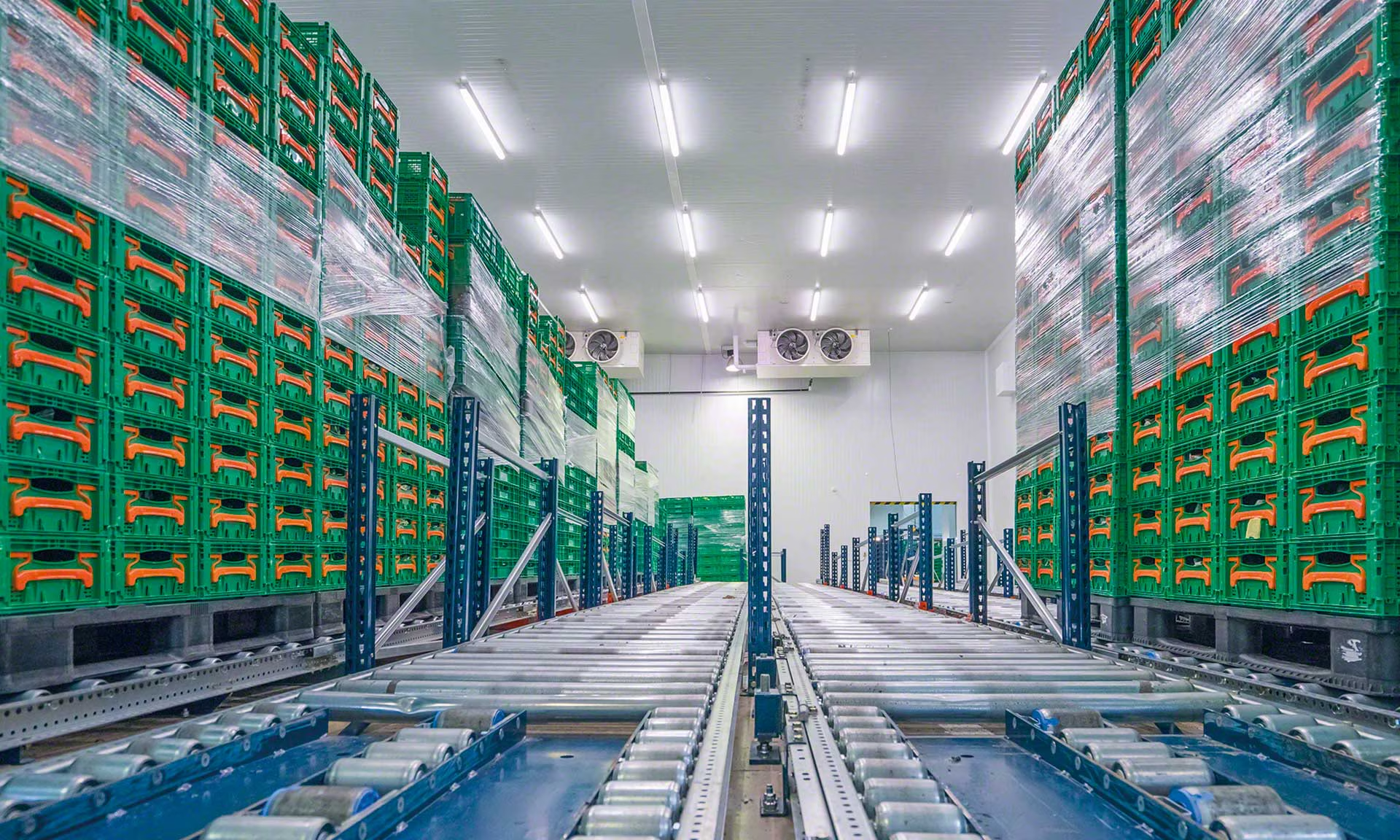
Maintaining optimal temperatures in warehouses and factories is critical—not just for the comfort and safety of workers, but also to ensure operational efficiency and protect stored goods from damage. However, finding scalable cooling solutions for such large spaces can be challenging. This blog provides insights into practical and effective cooling options that can keep industrial environments efficient and comfortable without spiraling energy costs.
1. Invest in an Efficient Commercial Building Air Conditioning System
Large industrial spaces require tailored cooling solutions, and investing in a commercial building air conditioning system is a solid first step. These systems are specifically designed to handle the unique needs of warehouse and factory environments, where traditional HVAC systems may fall short.
Advanced air conditioning systems allow for precise temperature control across vast spaces, ensuring that all areas are cooled efficiently. Some models even come with zoning capabilities, enabling you to prioritize parts of the building with high traffic or heat-sensitive inventory. For scalability, modular systems can be added or adjusted as the needs of the factory grow, ensuring your cooling setup evolves with your business.
2. Implement Smart Temperature Control Systems
Smart temperature control systems are revolutionizing how large spaces maintain optimal conditions. Programmable thermostats, for instance, allow businesses to set specific temperatures for different times of the day. This feature can lead to significant energy savings by avoiding over-cooling during non-operational hours.
According to the Department of Energy, adjusting temperatures by 7°F to 10°F during off-peak hours can reduce cooling costs by up to 10% annually. Additionally, advanced, AI-powered systems can adapt to seasonal changes and occupancy patterns, cutting down on energy waste while keeping employee comfort front and center.
3. Optimize Structural Cooling Efficiency
A well-sealed building envelope is crucial to achieving efficient cooling in massive spaces. Cracks in windows, doors, and roofing can allow cooled air to escape, leading to energy losses. Sealing these gaps with weatherstripping, caulking, or industrial-grade insulation can drastically improve a facility’s cooling efficiency.
Additionally, upgrading to energy-efficient windows or adding reflective roof materials can minimize heat gain in the summer months. The U.S. Department of Energy notes that steps like window sealing and insulation can reduce energy costs by up to 20%, making this a cost-effective improvement for large facilities.
4. Leverage Evaporative Cooling Solutions
Evaporative cooling is another effective approach for large industrial environments. This method works by pulling in outdoor air, cooling it through the evaporation process, and circulating it into the building. Evaporative coolers, or “swamp coolers,” are particularly effective in dry climates and can provide scalable, cost-effective cooling for warehouses and factories.
Unlike traditional air conditioners, evaporative coolers consume significantly less energy and reduce overall operating costs. This makes them an attractive solution for businesses looking to balance performance with sustainability.
5. Use High-Volume Low-Speed (HVLS) Fans
High-volume low-speed (HVLS) fans are perfect for assisting in the uniform distribution of cooled air across large spaces. These fans work by slowly moving large volumes of air to create a cooling breeze, reducing hotspots and improving the overall airflow in industrial spaces.
When used in conjunction with existing cooling systems, HVLS fans can lower perceived temperatures by up to 8°F, helping reduce dependency on air conditioning and thus lowering energy costs. HVLS fans are an excellent investment for facilities looking to scale their cooling without over-stretching their budgets.
6. Incorporate Zoning Systems for Targeted Cooling
Larger industrial structures can benefit immensely from zoning systems, which divide spaces into designated areas, each controlled via independent thermostats. Zoning allows businesses to prioritize cooling where it’s needed most, such as areas with machinery that generates high levels of heat, or spaces occupied by workers for extended periods.
By focusing cooling efforts where they’re crucial, zoning reduces energy wastage while maintaining optimal working conditions. This intelligent resource allocation makes zoning systems a scalable and efficient cooling option for warehouses and factories of all sizes.
Cooling large industrial spaces doesn’t have to be a complex or overly expensive challenge. By exploring scalable options such as advanced air conditioning systems, optimized structural cooling, and energy-efficient fans, you can maintain a comfortable, efficient environment for your workers and operations. Integrating smart technologies, like programmable thermostats and zoning systems, further ensures your setup is efficient and adaptable to future needs.
